Best Fridge Brands in New Zealand (2026 Buyer’s Guide)
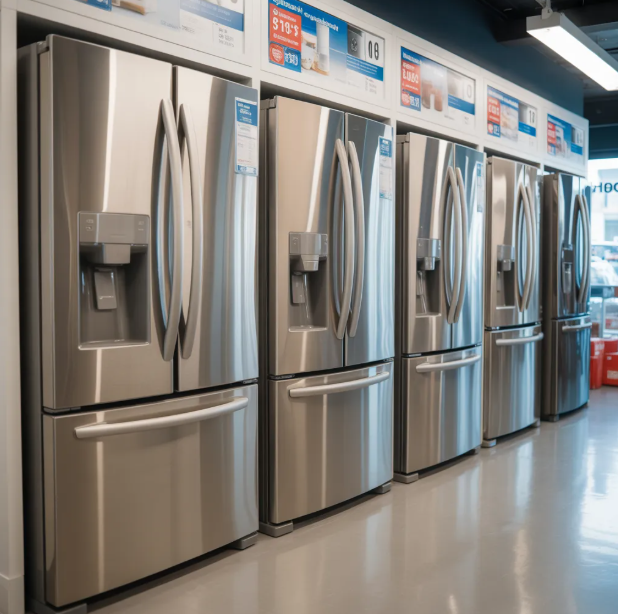
Best Fridge Brands in New Zealand (2026 Buyer’s Guide)
When you search for the “best fridge brands” in New Zealand, what you’ll usually find is a mix of overseas reviews, retailer lists, and short opinion pieces that don’t reflect how Kiwis actually shop. The reality is more nuanced. The best fridge brand for a student flat in Wellington is not the best brand for a five-person household in Auckland. The best brand for a bar fridge in a sleepout is not the same as the best brand for a plumbed French door fridge in a new-build kitchen.
This guide focuses specifically on the NZ market. It considers what is actually stocked here, how local kitchens are designed, how electricity costs influence ownership, and which brands have meaningful service presence in New Zealand. Instead of chasing hype, we focus on usability, energy performance, long-term ownership practicality, and format suitability.
What “Best Fridge Brands” Means for NZ Homes
In New Zealand, the definition of “best” almost always comes down to practicality rather than prestige. A premium badge on the door does not automatically mean better temperature stability, better layout, or lower running costs. The best fridge brand is the one that delivers consistent food-safe temperatures, an internal layout that genuinely works for your shopping habits, a manageable noise level, and realistic long-term ownership support within NZ.
NZ-Specific Factors That Matter
Kitchen Sizes, Bench Heights, and Door Swing
Many NZ kitchens — especially in older villas or townhouses — were not built around ultra-wide American-style refrigeration. Wide French doors and side-by-side units can require more clearance than people expect. Even an extra 30mm of cabinet depth can restrict walkway space or limit door opening.
Door swing direction is another overlooked factor. In tighter kitchens, if the hinge orientation is wrong, you may never fully access internal drawers. A brand that offers reversible doors in compact and mid-size models has a real advantage in NZ homes.
Delivery Access: Stairs, Narrow Halls, Apartments
In Auckland and Wellington especially, apartments and multi-level homes are common. The true limitation is often delivery path width and tight stair turns — not litre capacity. Some larger fridges can technically fit in the kitchen but cannot physically get through the front door or hallway.
Choosing brands with multiple cabinet width options in the same format category provides flexibility. A manufacturer that only produces oversized chassis designs limits your choices.
Power Costs and Lifetime Running Cost
Refrigerators run 24 hours a day, every day of the year. Even small differences in annual energy consumption can translate to noticeable changes in long-term ownership costs.
New Zealand’s Energy Rating Label displays both star rating and estimated annual energy consumption in kWh per year. While star ratings are useful, the kWh/year figure gives a clearer picture when comparing similar-sized appliances. Over 10–15 years of operation, efficiency differences can offset initial purchase savings.
The Real Trade-Offs
Price vs Reliability
Cheaper refrigerators can represent excellent value — especially in simpler top or bottom mount formats — provided the brand has reliable parts availability in NZ. A slightly higher purchase price can be worthwhile if it reduces the likelihood of early component failure or improves internal food preservation, thereby reducing waste.
Features vs Long-Term Maintenance
Ice makers, internal cameras, Wi-Fi connectivity, external water dispensers, and smart app integration are appealing. However, each additional feature introduces more components that may require servicing over time. Simplicity often translates into lower long-term maintenance exposure.
Capacity vs Footprint
Bigger is not always better. If a fridge is too large for your household, airflow can be compromised by half-filled shelves. Conversely, if it is too small, overloading can affect cooling stability. The best choice balances usable internal space with appropriate cabinet size.
How We Evaluated Fridge Brands for NZ
This analysis considers:
-
NZ retail availability across multiple appliance chains
-
Depth of product range (mini → mid-size → family → French door → side-by-side)
-
Compliance with NZ energy labelling standards
-
Practical design layouts suited to Kiwi households
-
Brand longevity and local service footprint
-
Ownership practicality and repair realism
Rather than selecting one “winner,” we assess where each brand performs strongest within its format category.
Fridge Types and Sizes in New Zealand
Choosing the right fridge type simplifies the brand decision dramatically. Most dissatisfaction arises from format mismatch, not brand failure.
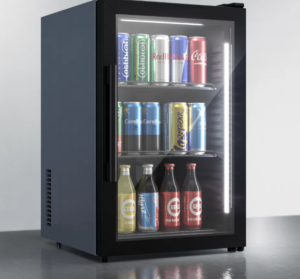 Mini Fridges (Approx. 4–50 Litres)
Mini fridges are typically used in bedrooms, offices, student accommodation, cosmetic storage, caravans, or sleepouts. In this category, cooling consistency and quiet operation matter more than advanced shelving systems.
The best mini fridge brands in NZ are those that offer:
-
Stable cooling without excessive frosting
-
Low compressor noise
-
Strong door seals
-
Reasonable warranty support
Because these units are often placed near sleeping areas, vibration and compressor cycling frequency become important factors.
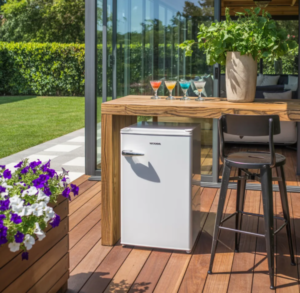 Bar Fridges (Under-Bench / Drinks Fridges)
Bar fridges are commonly used for beverages, additional overflow storage, or hospitality-style setups. The most important considerations are bottle layout design, internal shelf adjustability, and ventilation clearance when placed under cabinetry. Capacity alone is not enough — the internal configuration must suit what you actually plan to store, whether that’s wine bottles, craft beer cans, mixers, or snack trays.
A good bar fridge brand provides consistent temperature retention with frequent opening and has hinges designed for heavy, repeated use. Door seals must remain tight even when the fridge is opened dozens of times during gatherings. Poor ventilation can increase compressor stress, so units designed for tight installations are preferable. Front-venting systems, solid rear clearance guidance, and reliable thermostat calibration all contribute to smoother long-term performance and lower mechanical strain.
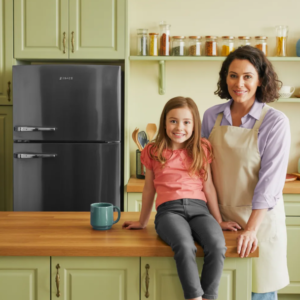 Mid-Size Fridges (250–450 Litres)
This is the most popular segment in NZ. Bottom mount refrigerators are especially common because they place the fridge compartment at eye level.
Strong brands in this category tend to offer:
-
Multiple cabinet width options
-
Clear, adjustable shelving systems
-
Well-designed produce drawers
-
Practical freezer baskets
-
Efficient energy profiles
Mid-size models often strike the best balance between cost, reliability, and usability for couples and small families.
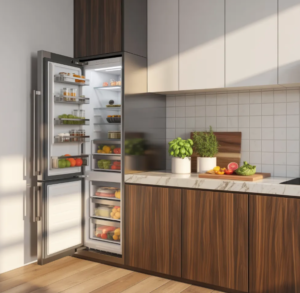 Family-Size Fridges (450–650 Litres)
The best brands in this size class place a strong emphasis on structural integrity because family-size refrigerators operate under far heavier and more consistent loads than smaller units. In real-world use, shelves are not holding a few light containers — they are supporting stacked leftovers, bulk grocery items, heavy glass jars, 3-litre milk bottles, and large platters. Over time, this constant weight exposes weaknesses in shelf supports, plastic trim, and bracket reinforcement.
Heavy food loads put sustained stress on shelving brackets and the internal liner where those brackets anchor. If the internal framework lacks rigidity, shelves can begin to bow subtly in the middle. That slight sag may not be obvious at first, but it places ongoing strain on mounting points, eventually leading to cracking, instability, or misalignment. Premium structural designs often use reinforced mounting systems, thicker tempered glass, and stronger sidewall support channels to prevent this long-term deformation.
Drawer slides and crisper runners are another stress point. Family households open produce drawers dozens of times per week, often when they are fully loaded with dense items such as apples, pumpkins, potatoes, and beverages. Lightweight rails or thin plastic track systems can begin to stick, twist, or grind under this repeated load. Better-engineered models use reinforced runners, smoother glide mechanisms, and sturdier front panels to prevent flexing when drawers are extended at full capacity.
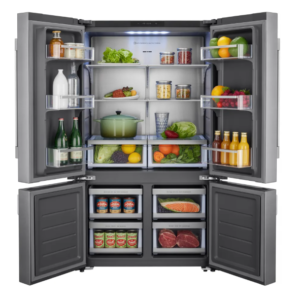 French Door and Quad Door Fridges
French door fridges are popular in open-plan NZ kitchens. They allow wide tray storage and provide excellent fridge access. Quad door configurations offer separate compartments for improved organisation.
The best brands here offer:
-
Stable ice and water systems
-
Adjustable humidity drawers
-
Strong hinge mechanisms
-
Smooth drawer runners
-
Logical temperature zoning
However, they require space. Clearance planning is critical before purchasing.
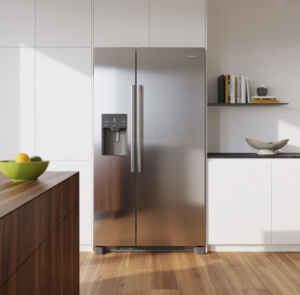 Side-by-Side / Double Door Fridges
Side-by-side fridges prioritise vertical freezer and fridge access. They are suitable for households that value frequent freezer access and prefer everything at eye level rather than bending to reach deep bottom drawers. This configuration can be especially practical for families who rely heavily on frozen foods or bulk meat storage.
They can be excellent if you prefer upright freezer compartments rather than bottom drawers. However, narrow internal shelving can limit wide item storage such as pizza boxes, platters, or oversized containers, which may require more careful organisation.
The best brands in this category offer reinforced shelving, adjustable door bins, and reliable frost-free defrost systems that prevent ice build-up over time. Consistent airflow design is also important, as the tall vertical layout depends on even cooling distribution from top to bottom. Strong hinge construction matters too, as these doors are typically heavier and opened frequently throughout the day.
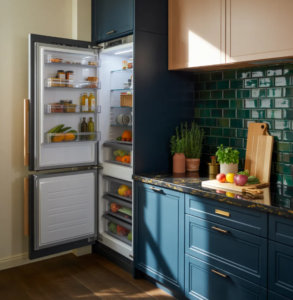 Integrated / Built-In Refrigeration
Integrated refrigeration suits renovations and high-end new builds. Cabinet integration requires exact ventilation, panel alignment, and hinge support.
Only brands with clearly specified installation guidelines and strong local service support should be considered. Errors in integrated installs can be expensive to correct.
Beyond aesthetics, integrated units demand precise airflow engineering. These appliances rely on designated ventilation channels either above, below, or through cabinetry panels to prevent heat buildup around the compressor. Incorrect clearances can reduce efficiency and significantly shorten component lifespan. Panel weight must also be matched to hinge capacity — oversized or poorly balanced cabinet fronts can strain hinges, leading to misalignment or sealing issues. Proper installation is not optional; it is structural.
Brand-by-Brand Overview in NZ
Fisher & Paykel
Fisher & Paykel has a long-standing and highly visible presence in the New Zealand appliance market, with products widely stocked across major retailers in virtually every mainstream refrigeration format, from compact units through to large French door and quad door models. The brand is particularly strong in the mid-size and family-capacity segments, where internal layout practicality, drawer configuration, and shelf usability tend to be carefully considered for local shopping habits. Over time, the company has built familiarity within NZ households, which contributes to brand confidence and relatively straightforward access to servicing and replacement parts.
Best for: Buyers who want strong nationwide availability, proven mainstream formats, and a layout philosophy that feels aligned with typical Kiwi kitchens.
Consideration: Higher-end models may carry premium component pricing, meaning out-of-warranty repairs — particularly for electronic boards or water systems — can cost more than simpler alternatives.
Mitsubishi Electric
Mitsubishi Electric is well regarded in New Zealand, especially within the bottom-mount refrigerator category, where it consistently offers mid-range models that balance reliability, internal usability, and build quality. The brand is often associated with steady long-term performance rather than aggressive feature innovation, making it appealing for households that prioritise dependability over novelty. Its mid-size fridge-freezers commonly attract buyers seeking stable temperature control and a straightforward ownership experience.
Best for: Households wanting a reliable mid-size fridge-freezer designed for consistent long-term use rather than heavy feature integration.
Consideration: Distribution can vary between retailers, so specific sizes or finishes may not always be readily available in every region.
LG
LG maintains a strong presence in larger-capacity refrigeration, particularly in French door and side-by-side formats, where wide shelving and high-capacity storage are prioritised. The brand is frequently selected for its modern exterior finishes, technology integration, and storage innovations that aim to enhance organisation and accessibility. In NZ, LG models are commonly seen in open-plan kitchen environments where capacity and layout flexibility matter.
Best for: Larger households or entertainers who want wide-format storage, contemporary design, and expanded feature sets.
Consideration: Before selecting higher-spec models, it is important to evaluate which smart or advanced features will genuinely be used, as added complexity can increase both purchase price and long-term maintenance exposure.
Samsung
Samsung offers one of the broader refrigeration ranges in New Zealand, covering mid-size bottom mounts through to expansive French door units with multiple compartment configurations. The brand positions itself as design-forward and feature-focused, often incorporating digital controls, flexible storage zones, and aesthetic finishes that align with modern kitchens. Storage configurations are typically engineered for flexibility, with adjustable shelving and modular bin systems.
Best for: Buyers who prioritise contemporary design, adaptable storage solutions, and technology-driven features.
Consideration: For features such as ice makers, water dispensers, or electronically controlled compartments, it is wise to understand warranty coverage and servicing procedures in advance to avoid unexpected costs later.
Haier
Haier has established a strong value-oriented position within the NZ refrigeration market, spanning compact units, mid-size bottom mounts, and family-capacity French door models. It is frequently positioned competitively on price, making it attractive to buyers balancing budget considerations with brand recognition. The brand typically offers multiple internal layout variations across its product lines, allowing shoppers to compare capacity and usability within similar price brackets.
Best for: Budget-conscious buyers who want a recognised brand name with solid presence in NZ retail.
Consideration: Internal shelf and drawer designs can vary significantly between models, so inspecting layout quality and component strength in person is recommended.
Westinghouse
Westinghouse remains widely stocked across New Zealand retailers and offers particularly strong representation in mid-size and family-capacity formats. The brand generally focuses on practical configurations with straightforward temperature control systems and usable shelf designs that prioritise function over novelty. Many households select Westinghouse for its familiarity and perceived ease of servicing within NZ.
Best for: Mainstream family households seeking practical configurations and accessible after-sales support.
Consideration: Some larger-capacity models can run deeper than expected, so accurate kitchen measurements are essential before committing.
Panasonic
Panasonic is most commonly encountered in the mid-size bottom-mount category within NZ retailers, where it emphasises efficient operation and sensible internal layouts. The brand’s offerings are often positioned as practical and energy-conscious, appealing to buyers who prefer simplicity and consistency over heavy feature integration. Panasonic models tend to maintain straightforward controls and durable structural design.
Best for: Households seeking uncomplicated, reliable fridge-freezers that focus on core performance without unnecessary complexity.
Consideration: The overall range is smaller compared to some dominant multinational competitors, which may limit format flexibility.
Bosch
Bosch is more frequently associated with premium and integrated refrigeration solutions in the NZ market, often appearing in renovation-focused or architecturally designed kitchens. Its engineering reputation and detailed installation requirements align well with built-in cabinetry environments where precision is critical. Bosch models typically emphasise material quality, insulation design, and controlled airflow systems.
Best for: Renovation projects or integrated kitchen designs requiring built-in compatibility and engineering precision.
Consideration: Installation specifications must be confirmed carefully to ensure cabinet ventilation and hinge alignment meet manufacturer requirements.
Beko
Beko competes actively on price within the New Zealand market and is commonly seen in compact, mid-size, and selected family-capacity formats. It appeals to shoppers looking for a balance between affordability and recognisable branding without entering ultra-premium pricing tiers. Design language is generally modern yet restrained, with practical internal configurations.
Best for: Cost-sensitive shoppers wanting a recognised brand while maintaining budget discipline.
Consideration: Before purchase, verify parts availability and service coverage in your specific region to avoid future inconvenience.
Hisense
Hisense often positions itself competitively in larger-capacity refrigeration segments, offering sizeable storage at accessible purchase prices. For buyers focused primarily on maximum litre capacity within a limited budget, the brand can present strong initial value propositions. It typically incorporates contemporary finishes and reasonably flexible storage layouts.
Best for: Buyers seeking larger-format refrigeration without entering premium pricing brackets.
Consideration: Inspect drawer runners, shelving strength, and internal fittings in person to assess long-term durability.
Electrolux
Electrolux holds a premium position within NZ refrigeration and is frequently selected by buyers who value finish quality, aesthetic refinement, and higher-end design integration. The brand typically presents clean internal layouts and a styling approach that complements designer kitchens. In many cases, Electrolux sits slightly above mainstream competitors in terms of perceived build finish.
Best for: Design-conscious buyers who prioritise styling, material finish, and brand prestige within the kitchen environment.
Consideration: Confirm that energy consumption figures align proportionately with the fridge’s size and feature set to ensure running costs remain practical.
Miele
Miele occupies the high-end segment of the NZ appliance market and is most commonly encountered in luxury or fully integrated refrigeration installations. The brand emphasises engineering precision, premium materials, and long product life cycles. Ownership is typically part of a broader coordinated kitchen appliance ecosystem, rather than a standalone purchase.
Best for: Buyers investing in luxury kitchen ecosystems who prioritise long-term durability, brand heritage, and integrated design cohesion.
Consideration: Purchase cost sits at the premium end of the market, and servicing expectations should be clearly understood prior to installation.
Matching the Right Fridge to Your Household
Choosing the right refrigerator begins with understanding how your household shops, cooks, stores food, and uses kitchen space on a daily basis. Capacity numbers alone rarely determine satisfaction. The structure of your home, your grocery habits, and how frequently the fridge is opened all influence which format will deliver the most reliable long-term experience.
Renters and Small Spaces
Compact and mid-size bottom mounts are typically the most practical solutions for renters, apartment dwellers, and smaller homes where kitchen space is limited and delivery access may be restricted. These formats provide usable freezer capacity without requiring excessive floor width, making them easier to position in tight layouts or galley-style kitchens.
Simplicity is preferable in rental environments because straightforward mechanical designs generally reduce servicing complexity and lower the likelihood of issues related to plumbed water systems or advanced electronic features. Fewer components often mean easier transport when moving properties and fewer compatibility concerns with varying kitchen layouts.
Couples and Small Families
Mid-size bottom mount refrigerators provide one of the best overall usability balances for couples and small families because they combine manageable external dimensions with sufficient internal flexibility. The fridge compartment sits at eye level, allowing everyday items such as milk, produce, and leftovers to be accessed comfortably without bending repeatedly.
This format also provides enough freezer capacity to handle weekly grocery storage without encouraging unnecessary oversizing, which can lead to inefficient use of internal space. Adjustable shelving and well-designed produce drawers make this category particularly adaptable for households with evolving storage needs.
Families of Four or More
Family-size or French door units with strong internal organisation are ideal for larger households that shop in volume and store food in heavier loads. Wide shelving accommodates large platters, bulk packaging, and multiple meal-prep containers without forcing awkward stacking that can obstruct airflow.
Strong internal organisation systems — such as reinforced crisper drawers, deep freezer baskets, and adjustable door bins — become increasingly important when a fridge is opened dozens of times per day. Durability in drawer slides and shelf brackets ensures the appliance maintains usability under sustained heavy use over many years.
Entertainers
French door or quad door formats offer wide tray storage and greater flexibility when hosting gatherings or preparing large meals. Their broader shelves allow platters, charcuterie boards, and baking trays to slide in without reconfiguring multiple shelf levels.
Separate compartment zoning in quad door configurations can also help isolate frequently accessed items, which minimises cold air loss during social events. This layout makes it easier to organise beverages, desserts, and meal-prep ingredients while maintaining temperature stability.
Renovations and New Builds
Integrated or premium freestanding units must be selected early in the kitchen design process to ensure cabinetry, ventilation spacing, and structural framing can accommodate the appliance’s exact dimensions. Built-in refrigeration often requires precise installation tolerances, including hinge clearance, airflow channels, and panel alignment.
Choosing the unit before final cabinetry measurements are locked in reduces the risk of expensive modifications later. Premium freestanding models also benefit from early planning, especially when designing around island benches, sculleries, or custom storage layouts.
Pre-Buy Checklist (NZ Edition)
Measure Doorways and Clearance
Carefully measure not only the space where the fridge will sit but also every doorway, hallway turn, and stairwell it must pass through during delivery. Even minor dimensional miscalculations can prevent successful installation and lead to additional transport costs or return complications.
Check Hinge Direction
Confirm whether the fridge door opens in the correct direction for your kitchen workflow and surrounding cabinetry. In tighter NZ kitchens, improper hinge orientation can restrict full shelf access or create awkward daily movement patterns.
Compare Annual kWh Consumption
Review the Energy Rating Label’s kWh per year figure to understand estimated running costs. Comparing similar-sized models by annual consumption allows you to identify efficiency differences that can compound significantly over the appliance’s lifespan.
Understand Warranty Coverage
Examine what components are covered under manufacturer warranty and for how long, particularly for compressors, electronic control boards, and water systems. Clear warranty terms provide insight into how the manufacturer supports long-term ownership.
Confirm Local Service Agents
Ensure the brand has authorised service technicians operating in your region. A fridge may carry an attractive warranty, but practical access to repairs depends on available local support.
Choose Format Before Choosing Badge
Decide on the fridge type that best suits your space and usage habits before focusing on brand identity. Once the correct format is determined, comparing brands within that category becomes far more effective and practical.
No Comments